Deal-Making: A Blueprint for Finding (and Managing) Profitable Rehabs

Let’s talk about the local blueprint with one simple theme: Precision Investing in Middle Tennessee.

With active listings up 13% year-over-year and homes sitting an average of 62 days, the leverage has shifted in a way that disciplined investors can use. You’ve got more room to negotiate, more time to verify numbers, and more chances to structure terms that protect your downside.

The question is: are you positioned to use today’s conditions to your advantage?

If you're looking to sharpen your deal-finding skills and get your rehab game dialed in, you're in the right place. And if you want the modern playbook (built for right now), we’re covering this exact topic at our Main Event on Monday, February 9th. But first, let’s break down what’s working in Middle Tennessee.


The Middle Tennessee Blueprint (Precision Investing in Middle Tennessee)

Before we dive into tactics, let’s get grounded in what matters for deal-making right now.

Your negotiation advantage: Inventory is up, days on market are longer, and that gives you leverage. Not “hope-the-market-bails-me-out” leverage—real leverage you can use to:

  • Ask for price reductions based on dated finishes or functional obsolescence
  • Negotiate seller credits (roof, HVAC, closing costs, rate buydowns for retail exits)
  • Get access and time for inspections, scope verification, and contractor walk-throughs
  • Write offers with clean contingencies that protect you without killing the deal

Opportunity Zones to watch right now:

  • Davidson County urban core: As buyers prioritize shorter commutes and convenience, well-bought properties close to jobs, hospitals, universities, and major corridors can stay liquid—if you buy right and rehab to the neighborhood.
  • Softening condo market: More reprices and longer market times can create openings for investors who can underwrite HOA costs correctly and have a clear exit (resale, medium-term, or long-term rental where allowed).

The bottom line: This market rewards precision—tight buy boxes, tighter numbers, and strong relationships. That’s where Real Estate Investors of Nashville members tend to win: better info, better connections, and fewer expensive surprises.


Finding Deals Beyond the MLS

Here's a truth bomb: if you're only looking at MLS listings, you're competing with every other investor (and retail buyer) in town. The real money is in off-market deals—properties that never hit the open market.

So how do you find them?

1. Build Your Data Machine (PropStream + PropGrid)

You can't find deals you don't know about. Tools like PropStream and PropGrid (Middle Tennessee-based) let you filter properties by equity position, absentee ownership, pre-foreclosure status, tax delinquency, and more.

Use them to build a tighter buy box:

  • Target higher DOM pockets for negotiation leverage
  • Pull lists by equity + motivation signals (absentee + code issues + tax delinquency, etc.)
  • Confirm true rehab comps and recent investor activity so you don’t over-improve

Set up your criteria, pull your lists, and start your outreach. The investors who consistently find deals are the ones who consistently work their data.

2. Direct-to-Seller Marketing

Once you've got your lists, it's time to make contact. That could mean:

  • Direct mail campaigns (yes, they still work)
  • Cold calling or texting (with proper compliance, of course)
  • Door knocking in target neighborhoods
  • Driving for dollars and noting distressed properties

The key is consistency. One mailer won't cut it. But six touches over three months? That's when motivated sellers start picking up the phone.

Real estate investor at desk analyzes local property data, prospecting off-market deals for profitable rehabs

3. Leverage the REIN Network for Off-Market Deals

This is where REIN membership really shines. Every month at our Haves & Wants sessions and PropSwap events, members bring deals they're looking to move. Wholesalers pitch properties. Investors connect.

Some of the best deals never get marketed publicly: they change hands between people who know and trust each other. When you're plugged into a room full of active investors, you hear about opportunities before anyone else—and you can sanity-check numbers with people who are actually buying and rehabbing in Middle Tennessee right now.

4. Build Relationships with "Bird Dogs"

Bird dogs are people who find deals for you in exchange for a finder's fee. They could be mail carriers, contractors, property managers, or even neighbors in your target areas. Give them your criteria, hand them some business cards, and let them know there's money in it for them when they bring you a lead that closes.


Managing Rehabs Without Losing Your Mind (or Your Profit)

Finding the deal is only half the battle. The other half? Getting the rehab done on time, on budget, and without wanting to throw your phone into the Cumberland River.

Here's how the pros do it:

Start with a Realistic Budget

Hope is not a line item. When you're estimating rehab costs, build in a contingency of at least 10-15%. Materials go up. Surprises happen behind walls. Your "simple cosmetic flip" turns into a foundation issue.

Use local comps and contractor estimates: not national averages: to build your numbers. And if you're not sure what things cost in Middle Tennessee, ask someone who's done it recently. (Hint: that's what our meetings are for.)

Lock Down Your Contractor Relationships

A great contractor is worth their weight in gold. A bad one will cost you months and thousands.

Here's how to protect yourself:

  • Get multiple bids before committing
  • Check references and actually call them
  • Use detailed scopes of work so everyone's clear on expectations
  • Structure payments tied to milestones, not front-loaded

Need a starting point? Check out our REIN Vendor Listings for contractors and service providers that other members have vetted. In a negotiation-friendly market, strong vendor relationships also help you move faster during due diligence—because you can get real pricing and timelines before you lock in your final offer. Members have had good experiences with folks like Lakeland Building Partners for general contracting work.

Stay on Top of Your Timeline

Every day your property sits in rehab is a day you're paying holding costs: loan interest, insurance, utilities, taxes. Time literally is money.

Build a realistic timeline with your contractor, then check in weekly (or more). Use project management apps to track progress. And don't be afraid to have hard conversations early if things start slipping.

Fund It Right

Speaking of holding costs, how you fund your deal matters. In a market where margins are tighter, high-interest debt can eat your profit fast.

If you're not paying cash, explore your options:

The right funding partner can make or break your deal. Shop around, compare terms, and build relationships before you need the money.


Why Your Network Is Your Net Worth

Here's what separates investors who struggle from investors who scale: community.

When you're connected to other active investors, you get:

  • Deal flow you wouldn't find on your own
  • Contractor referrals from people who've already vetted them
  • Lender relationships with favorable terms
  • Real-time market intel on what's working right now
  • Accountability to keep you moving forward

That's exactly what Real Estate Investors of Nashville provides. We're not here to sell you a course or pitch you on some guru's system. We're a community of active investors helping each other win in Middle Tennessee.


Not a member yet? Now's the time. Learn about REIN membership and see why Middle Tennessee’s most active investors choose to be in a room full of other investors—so you can swap deal intel, get referrals you can actually trust, and avoid expensive mistakes.


The Bottom Line

This market rewards investors who are strategic, connected, and disciplined. Precision Investing in Middle Tennessee is the edge: tighter acquisition, better negotiation, cleaner rehab execution, and a stronger network.

Find better deals. Manage smarter rehabs. Lean on the REIN network.

Middle Tennessee Real Estate Investing: 5 Things Every REIN Member Should Know Right Now

If you've been investing in Middle Tennessee real estate for more than a few years, you already know this: the market has shifted. The pandemic-era playbook: snap up properties 20% below market, slap on some paint, flip in 90 days: doesn't work anymore.

The good news? The fundamentals are still strong. The strategies just need to shift. At Real Estate Investors of Nashville, we're watching our members adapt in real time, and the investors who are adjusting their approach are still finding plenty of opportunity.

Here are five things every REIN member should understand about the current local market: and how to position yourself for success this year.

Local rental property investment strategy replacing traditional house flipping approach

1. The Traditional "Buy and Flip" Model Is Dying (And That's Okay)

Let's start with the hard truth: deep discount properties are harder to find. Those 20–25% below-market deals that fueled quick flips? They're rare. Median home prices are hovering around $450,000, and annual appreciation has cooled to a steady 2–4% range.

This isn't a crash. It's a correction back to normal market behavior.

What this means for you: Short-term flipping strategies are getting squeezed. The real opportunity now is in buy-and-hold investing focused on cash flow and steady appreciation through rental income.

This is where being part of REIN makes a difference. At our monthly meetings, members are sharing what's working: creative financing structures, BRRRR strategies, small multifamily conversions. You're not figuring this out alone. You're learning from investors who are actively closing deals in this market.

Need help crunching the numbers on a potential rental property? PropStream gives REIN members access to detailed comps and rental data across Middle Tennessee. And if you're exploring creative financing, our vendor network includes local lenders like Capital Fund 1 and MCL Private Lending who understand investor deals.

2. Rental Demand Is Still Your Best Bet

While flipping opportunities tighten, rental properties continue to offer strong fundamentals. Job growth, sustained population inflows, and a growing renter base all support stable rental income.

But here's the catch: location matters more than ever.

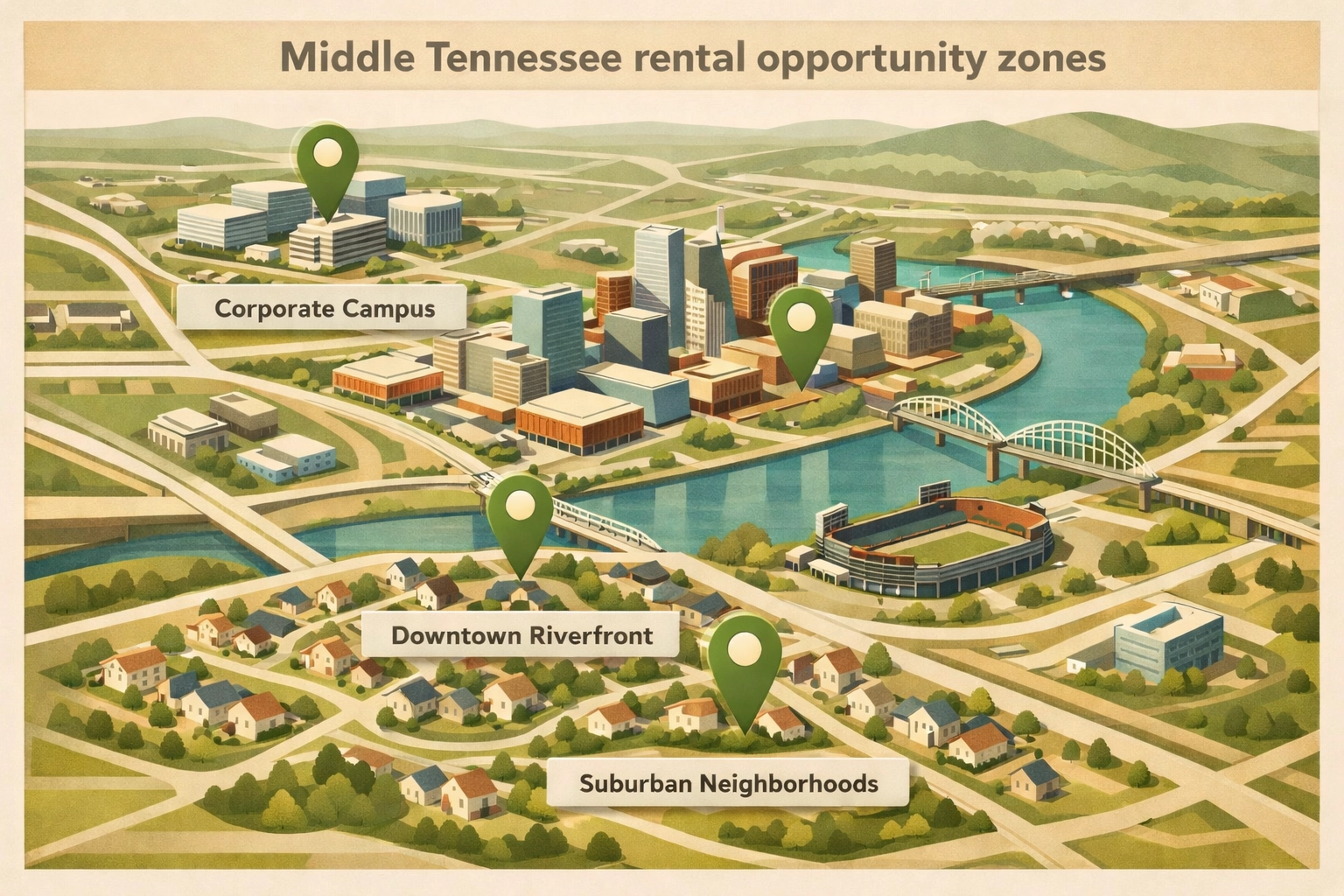
The strongest rental opportunities are clustering around:

  • East Bank development (downtown riverfront redevelopment)
  • Oracle's corporate campus expansion
  • Healthcare-related corridors
  • Established suburbs like Mt. Juliet and Hendersonville

Properties near major job centers and new corporate developments will appreciate earlier and faster than outlying areas. This isn't speculation: it's following employment anchors and infrastructure investment.

Middle Tennessee rental investment opportunity zones including East Bank and Oracle campus areas

One of the biggest advantages of being a REIN member is access to local intelligence. You hear about these shifts before they hit the mainstream news. A conversation at a Tuesday night meeting can give you six months of lead time on where the smart money is moving.

If you're building a rental portfolio, you also need systems in place. REIN members get free access to Rent Perfect property management software: a tool that streamlines tenant screening, rent collection, and maintenance tracking. It's one of the quiet benefits of membership that pays for itself quickly.

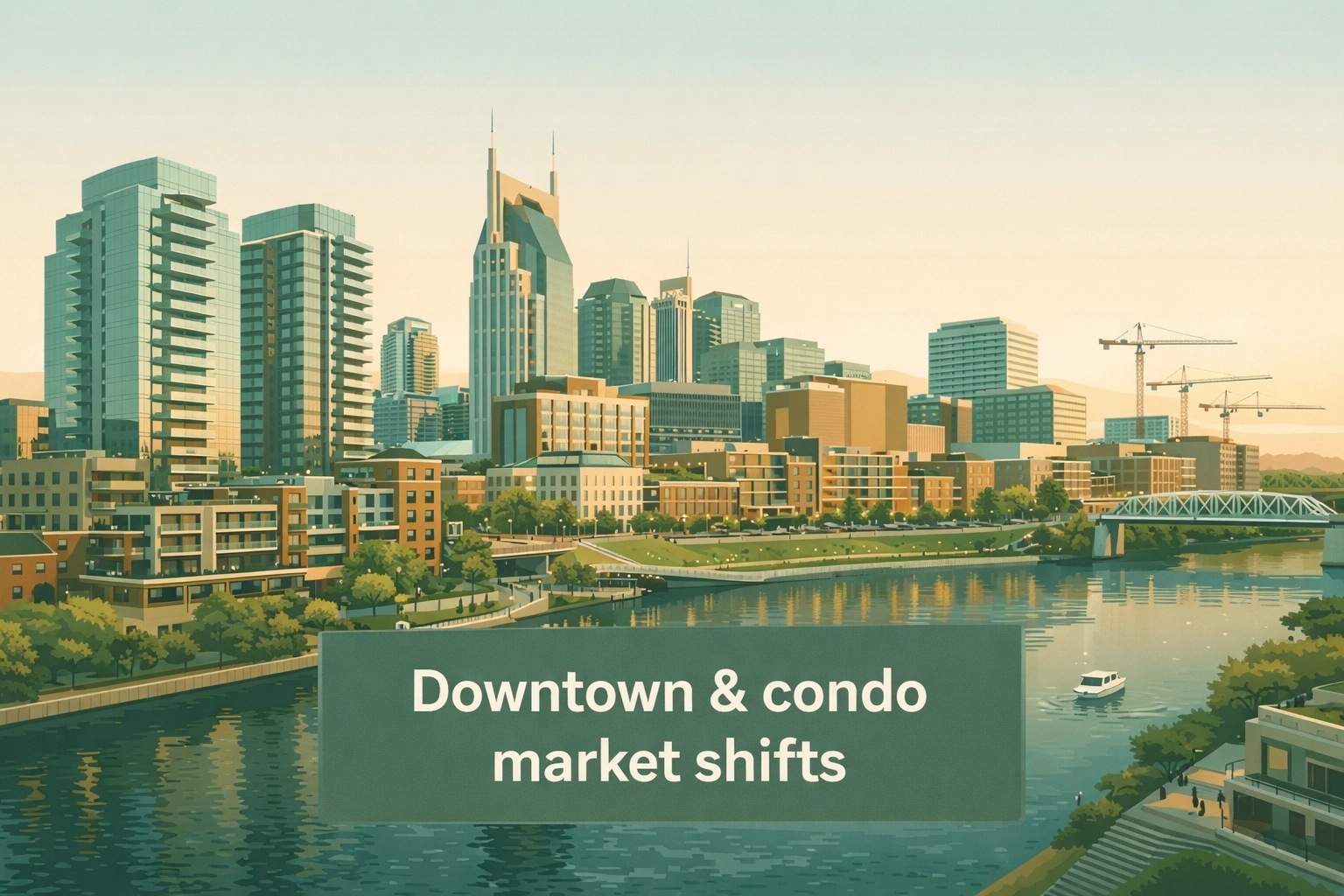
3. Downtown and Condo Markets Have Flipped: New Entry Points Exist

For years, downtown real estate was a bidding war. Not anymore.

Active listings in the downtown and condo sectors rose 13% year-over-year. That means inventory where there used to be scarcity. And while that might sound like bad news for sellers, it's creating entry points for buy-and-hold investors willing to play the long game.

Here's what we're watching: a recent $245 million riverfront scrapyard purchase signals major private investor confidence in downtown transformation. The future Titans stadium site and East Bank Flats (a planned 100-unit affordable housing project) are reshaping the riverfront.

This represents a shift from competitive bidding wars to strategic positioning in growth corridors.

If you're considering a downtown condo or loft purchase, don't expect a quick flip. Think 3–5 year hold. Think appreciation plus rental income from young professionals and corporate relocations. Think long-term value creation.

And if you're evaluating properties in these areas, having accurate data is critical. PropGrid, a local data platform, gives REIN members hyperlocal insights on Middle Tennessee properties that national platforms often miss.

4. Interest Rates Are Your Wild Card: Prepare for Both Scenarios

Mortgage applications jumped 15% in December as potential buyers prepared for market entry. The question everyone's asking: What happens if rates drop significantly?

Here's the reality: we're facing two very different scenarios.

Scenario 1: Rates decline slowly and moderately. This supports continued balanced conditions with modest appreciation. Investors can continue finding deals, negotiating terms, and building portfolios without major competition surges.

Scenario 2: Rates drop steeply (0.75% or more). This could trigger bidding frenzies that rapidly inflate prices and compress investor margins. If you've been through a hot market before, you know what this looks like: multiple offers, waived inspections, emotional buyers outbidding rational investors.

What should you do? Stress-test your acquisition strategy under both scenarios. Know your maximum purchase price. Know your financing options. And make sure you're working with lenders who can move quickly when opportunities arise.

This is another area where REIN membership pays dividends. At our monthly education events, we bring in industry professionals who break down market trends, financing strategies, and risk management. You're not guessing. You're learning from people who've navigated multiple market cycles.

Downtown skyline showing condo development and real estate growth opportunities

And if tax planning is on your mind (it should be), our sponsor Michelle Salyer, CPA works specifically with Tennessee real estate investors. Tax strategy can make or break your returns, especially in a shifting market.

5. Population and Job Growth Provide Long-Term Tailwinds

Here's the foundation beneath everything else: Middle Tennessee's fundamentals remain solid.

Continued in-migration, job creation, and population growth all support sustained housing demand. This isn't hype. It's data. And it provides confidence for buy-and-hold investors seeking multi-year appreciation.

But here's the caveat: competition for premium assets is intensifying. Early movers positioning in high-growth corridors: East Bank, Oracle campus vicinity, healthcare clusters: will likely outperform those waiting for better bargains.

The strategy shift is clear: Move from hunting for deals to identifying high-growth locations with strong employment anchors. Hold for steady 2–4% annual appreciation plus rental income, rather than depending on rapid price escalation or quick flips.

This is where the power of community comes in. At REIN, you're surrounded by investors who are tracking these trends, sharing deal flow, and comparing notes on what's working. You're not investing in a vacuum. You're part of a network that amplifies your knowledge and accelerates your decision-making.

The Bottom Line: Adapt or Get Left Behind

Today’s market rewards strategic positioning over fast flips. It rewards cash flow over speculation. And it rewards investors who are plugged into a community of active deal-makers.

If you're not already a REIN member, now is the time to join. We meet monthly for education, networking, and deal-making. We provide access to vetted vendors, local market intelligence, and a community of investors who are navigating the same challenges you are.

Become a REIN member today and position yourself for success in this new market reality.

Check out our upcoming events and start connecting with local investors who are closing deals right now.

The market has changed. Your strategy should too. But you don't have to figure it out alone.

Navigating Metro Nashville Government: A Quick Resource for Investors

Real estate investors who understand how local government works have a clear advantage. Whether it's zoning changes, permit processes, or policy shifts that affect property values, knowing who makes decisions and how to access them matters.

Why Metro Government Structure Matters for Investors

Since 1962, Nashville and Davidson County have operated under a consolidated metropolitan government: one of the first of its kind in the country. The structure includes:

  • A mayor and vice mayor
  • A 40-member Metro Council
  • Dozens of boards and commissions with varying levels of influence

For investors, this setup can feel complex. But understanding how it works helps when navigating:

  • Zoning and land use decisions that impact development potential
  • Permit applications for renovations, conversions, or new construction
  • Tax assessments and appeals that affect property operating costs
  • Ordinances and policy changes that could influence rental regulations or short-term rental laws

Nashville metro government structure and organizational chart for real estate investors

A Helpful Resource

The Nashville Banner recently published a guide breaking down the structure of metro government and offering tips on how to access it. Whether you're new to the area or have been investing here for years, it's worth a read.

Check out the full guide here.

The guide covers who does what, how decisions get made, and practical steps for getting involved or staying informed.

Why This Matters to the REIN Community

Real Estate Investors of Nashville exists to help members build knowledge, connections, and confidence. Understanding local government is part of that foundation.

Being in a room with other investors means learning not just from speakers and workshops, but from each other's experiences. Someone in the group has already dealt with a Metro Council meeting. Another member has navigated a zoning board. That collective knowledge saves time, money, and frustration.

The more informed the community is about how local decisions get made, the better positioned everyone is to adapt and succeed.

Get Involved

If you're serious about investing in Middle Tennessee, surround yourself with people who are doing the same thing. Real Estate Investors of Nashville brings together a community of investors who share insights, strategies, and real-world lessons every month.

Become a member today and get access to monthly meetings, educational events, and a network of investors who understand the local landscape.

Real Estate Investing in Tennessee 101: A Beginner's Guide to Getting Started in Nashville

So you've been thinking about getting into real estate investing. Maybe you've heard stories about local investors building wealth through rental properties, or you've watched enough HGTV to wonder if flipping houses could be your side hustle. Whatever brought you here, we're glad you found us.

At Real Estate Investors of Nashville, we've seen countless beginners transform into successful investors. The secret? Starting with solid fundamentals, connecting with the right people, and understanding what makes our local market unique.

Let's break down everything you need to know to take your first steps into Tennessee real estate investing.

Why Tennessee (and Nashville) Makes Sense for Beginners

Here's the good news: you picked a great place to start.

Tennessee offers some compelling advantages for new investors. The median home value sits around $319,167: significantly below the national average: while average monthly rents hover around $1,590. That gap between purchase prices and rental income creates real cash flow potential that's harder to find in pricier markets.

Beyond the numbers, Tennessee is a landlord-friendly state. We have favorable eviction laws and minimal rent control regulations, which means fewer headaches when things don't go as planned (and trust us, sometimes they don't).

Aerial view of Nashville skyline and suburban neighborhoods showcasing Tennessee real estate investment opportunities

For Middle Tennessee specifically, the ongoing population growth and economic development continue to drive demand for housing. Areas like Antioch, Madison, and parts of North Nashville offer emerging opportunities with strong long-term growth potential: perfect for investors willing to see past the current state of a neighborhood.

Understanding Your Investment Strategy Options

Before you start scrolling Zillow, you need to decide which investment approach fits your situation. Here are the main paths our members pursue:

Wholesaling: Quick Cash, No Ownership

Wholesaling involves finding off-market properties, getting them under contract, and assigning that contract to another investor for a fee. Typical assignment fees run $10,000 or more per deal.

Best for: Investors with limited capital who want to learn the market and build a buyer network before purchasing properties themselves.

What it takes: Hustle, marketing skills, and relationship-building with cash buyers.

Fix-and-Flip: The Classic Rehab Play

Buy an undervalued property, renovate it, sell it for profit. With Tennessee's median home price sitting 11.6% below the national average, typical gross flipping profits in our market run around $63,648.

Best for: Investors with some capital, construction knowledge (or a solid contractor), and tolerance for short-term risk.

What it takes: Understanding renovation costs, reliable contractor relationships, and the discipline to stick to your numbers.

Buy-and-Hold Rentals: Building Long-Term Wealth

Purchase properties and rent them out for ongoing cash flow and appreciation. This is how most investors build lasting wealth.

Best for: Investors seeking passive income and long-term financial security.

What it takes: Typically 10-20% down payment, patience, and solid property management skills (or a good property manager).

A simple rule of thumb: your rent should cover your mortgage plus at least $200 minimum to ensure positive cash flow after expenses.

Real estate investor's desk with laptop analytics, calculator, and property documents for deal analysis

Building Your Foundation Before Your First Deal

We've seen too many eager beginners jump into deals without proper preparation. Here's what you need to have in place first:

Get Your Finances in Order

Lenders want to see stability. Before you start house hunting:

  • Get pre-approved for financing
  • Maintain at least six months of expenses in emergency savings
  • Understand all the costs you'll face: not just the mortgage payment

Remember to calculate property taxes, insurance, maintenance reserves, vacancy allowances, and potential repairs into your numbers. That "great deal" can turn into a money pit fast if you only looked at purchase price versus rent.

Know Your Numbers Cold

The 70% rule is a classic investor guideline: never pay more than 70% of a property's after-repair value (ARV) minus renovation costs. While this isn't a hard rule for every situation, it provides a conservative framework that protects your profit margin.

For data and comps, tools like PropStream and PropGrid help local investors run accurate comparisons and price deals properly.

Understand Local Regulations

Each county and municipality in Middle Tennessee has different zoning rules, permit requirements, and rental regulations. What flies in Davidson County might not work in Williamson County. Do your homework before committing to any property.

Get Professional Guidance

Two professionals you absolutely need in your corner:

A real estate attorney who understands Tennessee's landlord-tenant laws, zoning regulations, and investment contracts.

A CPA experienced in real estate investing to help you navigate property taxes, capital gains, depreciation, and all the deductions available to rental property owners. Tax planning isn't sexy, but it's often where the real money is made (or lost).

The Power of Being in the Room

Here's something the books and podcasts won't tell you: real estate investing is a team sport.

You can watch all the YouTube videos you want, but nothing replaces being in a room full of people who are actually doing deals in your market. When you're part of a community like REIN, you gain:

  • Access to real-time market intelligence from investors actively buying and selling locally
  • Relationships with vetted vendors and contractors who won't disappear mid-project
  • Mentorship opportunities from members who've made the mistakes you're about to make
  • Deal flow from networking with wholesalers, agents, and other investors
  • Accountability from people who understand your goals

Collaborative Real Estate Investing Workshop

At our monthly Main Event meetings and educational workshops, members connect with lenders, contractors, property managers, and fellow investors who become their investing team. These relationships often make the difference between a successful first deal and a costly lesson.

Practical First Steps to Take This Week

Ready to move forward? Here's your action plan:

  1. Attend a REIN event. Check our calendar for upcoming meetings and workshops. Our Main Event is the second Monday of every month: it's the best place to start.

  2. Define your strategy. Based on your capital, time, and risk tolerance, decide whether wholesaling, flipping, or buy-and-hold makes the most sense for your first deal.

  3. Start building your team. You'll need a lender, CPA, attorney, and eventually contractors and property managers. Our vendor listings feature REIN-vetted professionals who understand investor needs.

  4. Get educated on financing options. Local lenders like Capital Fund 1, MCL Private Lending, and Investors Choice Loans specialize in working with investors. If you're interested in using retirement funds, IRA Innovations can walk you through self-directed IRA options.

  5. Learn your target neighborhoods. Drive them, study the comps, talk to local agents, and attend community meetings. The more granular your market knowledge, the better positioned you'll be to spot real opportunities.

Your Next Move

Real estate investing isn't a get-rich-quick scheme. It's a learnable skill that, when practiced consistently, builds real wealth over time. The investors who succeed are the ones who commit to education, build strong relationships, and take informed action.

We've been helping Middle Tennessee investors get started and level up since 1998. Whether you're looking for your first rental property or trying to scale to your twentieth, REIN provides the education, networking, and resources to help you reach your goals.

Ready to take the next step? Explore REIN membership and join the largest real estate investing community in Tennessee.

We'll see you at the next meeting.

Why Real Estate? Why Now? The Case for Fundamental Investing

January has a way of showing up loudly, forecasts flying in every direction, confident declarations about what will happen next, and no shortage of anxiety or bravado. Turn on the news or scroll through your feed, and you'll find a thousand opinions about where the market is heading.

We prefer to start somewhere quieter: what holds up even if the predictions miss the mark?

When decisions are rooted in fundamentals rather than headlines, there's less urgency to react and more room to move with purpose. Calm replaces noise. Discipline replaces guesswork. The better question isn’t “what’s the market going to do next?” It’s “what holds up either way?”

The Ground Beneath You

It's worth pausing to reflect on this personally: would placing capital in something steady, thoughtfully managed, and built for durability change how you feel about your financial picture?

For many investors, true confidence doesn't come from chasing upside, it comes from knowing the ground beneath you is solid.

Cash flow remains central. In any market environment, reliable cash flow creates breathing room. It allows flexibility, reduces dependence on perfect timing, and keeps decisions from being driven by pressure. If an opportunity doesn't make sense under conservative assumptions, and if it's not something you'd be comfortable holding for many years, it's simply not worth pursuing.

Real estate investment property showing positive cash flow analysis and financial planning

This principle gets tested anytime you pressure-test a deal with real assumptions and honest downside scenarios. Ask the hard questions:

  • Does it cash flow today with conservative rents and expenses?
  • What happens if rates stay elevated or insurance/taxes jump?
  • Can you hold it through a rough patch without being forced to sell?

These aren't theoretical exercises. They’re the filters that separate sustainable portfolios from shaky ones.

The Long View

The idea is hardly new. Long-term ownership has always been a reliable filter for sound investing. Looking at assets through a decade-long lens quickly exposes what's built on substance and what's built on hope.

Reviewing your own holdings through that same lens can be revealing.

The investors who've built real wealth aren't the ones who flipped their way to the top or timed the market perfectly. They're the ones who bought well, managed thoughtfully, and held through multiple cycles. They understand that durability beats brilliance almost every time.

It also helps to pressure-test your thinking with people who’ve been through downturns, rate hikes, and unexpected pivots. You get perspective rooted in experience: what worked, what didn’t, and why. That kind of feedback loop is hard to quantify, but it changes how you evaluate risk and opportunity.

Debt Deserves Equal Respect

Here’s the reality: debt is not a footnote; it’s structural. Financing choices often determine outcomes more than the properties themselves. Many portfolios don't fail because the asset was flawed, but because the debt was brittle.

Sensible leverage, clear terms, and downside protection matter just as much as location or purchase price. The quality of a deal is inseparable from the quality of its financing.

Real estate financing documents and loan paperwork for investment property purchase

Good financing isn't about getting the lowest rate. It's about getting terms that align with your hold strategy, cash flow projections, and risk tolerance.

The wrong debt structure can turn a good property into a nightmare. The right one gives you runway to execute your plan, even when conditions shift. Pay attention to:

  • Term length vs. your timeline (rehab, stabilization, refinance, or long hold)
  • Rate structure (fixed vs. adjustable, interest-only periods, resets)
  • Fees and extension options (what happens if the project runs long?)
  • DSCR and reserves (can the deal survive vacancy or a rent drop?)
  • Refinance assumptions (capex, seasoning, appraisal risk, and exit options)

Execution Is Where Results Are Earned

The unglamorous work, improving operations, managing expenses, enhancing the resident experience, and refining systems, is what compounds quietly over time. It rarely draws attention, but it's where lasting value is created.

Doing fewer things well has always outperformed doing many things halfway.

This is the part of real estate that separates hobbyists from business owners. It's not sexy. It's tracking maintenance costs, building relationships with reliable contractors, implementing tenant retention strategies, and consistently improving your property management systems.

Investors using solid property management systems and reliable partners aren't doing it for fun, they're doing it because execution compounds. Small improvements in vacancy rates, maintenance costs, or tenant quality add up to massive differences in returns over time.

And when things go sideways, and they will, the investors with tight operations and strong relationships come out ahead. That's not luck. It's preparation meeting opportunity.

Alignment Matters

In fields where trust is essential, the guiding principle has long been that those being served come first. Applied to investing, that belief shapes how incentives are structured and how stewardship is practiced. When outcomes are tied to performance and long-term care rather than short-term rewards, better decisions follow.

Excellence, patience, and responsibility tend to reinforce one another.

Alignment shows up in how you structure decisions and incentives so the property (and the resident experience) doesn’t get sacrificed for short-term wins. When outcomes are tied to performance and long-term care rather than quick rewards, better decisions follow.

Property management systems comparison showing organized maintenance vs poor upkeep

Alignment also means building a feedback loop around your investing. Whether that comes from a trusted partner, a mentor, or a small circle of investors, it matters. Sitting next to someone who's solved the exact problem you're facing changes your decision-making. You ask better questions. You avoid more mistakes. You move with more confidence because you’re not doing this in a vacuum.

Why Now?

None of these principles are novel. In many ways, they reflect how things have always been done when they're done well. And looking ahead, those time-tested principles remain just as relevant as ever.

Markets cycle. Headlines change. Interest rates move up and down. But the fundamentals: cash flow, smart financing, operational excellence, and long-term thinking: always hold.

The question isn't whether real estate is a good investment. The question is whether you're approaching it with the right mindset, the right numbers, and the right discipline.

Because at the end of the day, the best investment you can make isn't a property. It's the knowledge, relationships, and discipline that help you choose the right properties: and manage them well for the long haul.