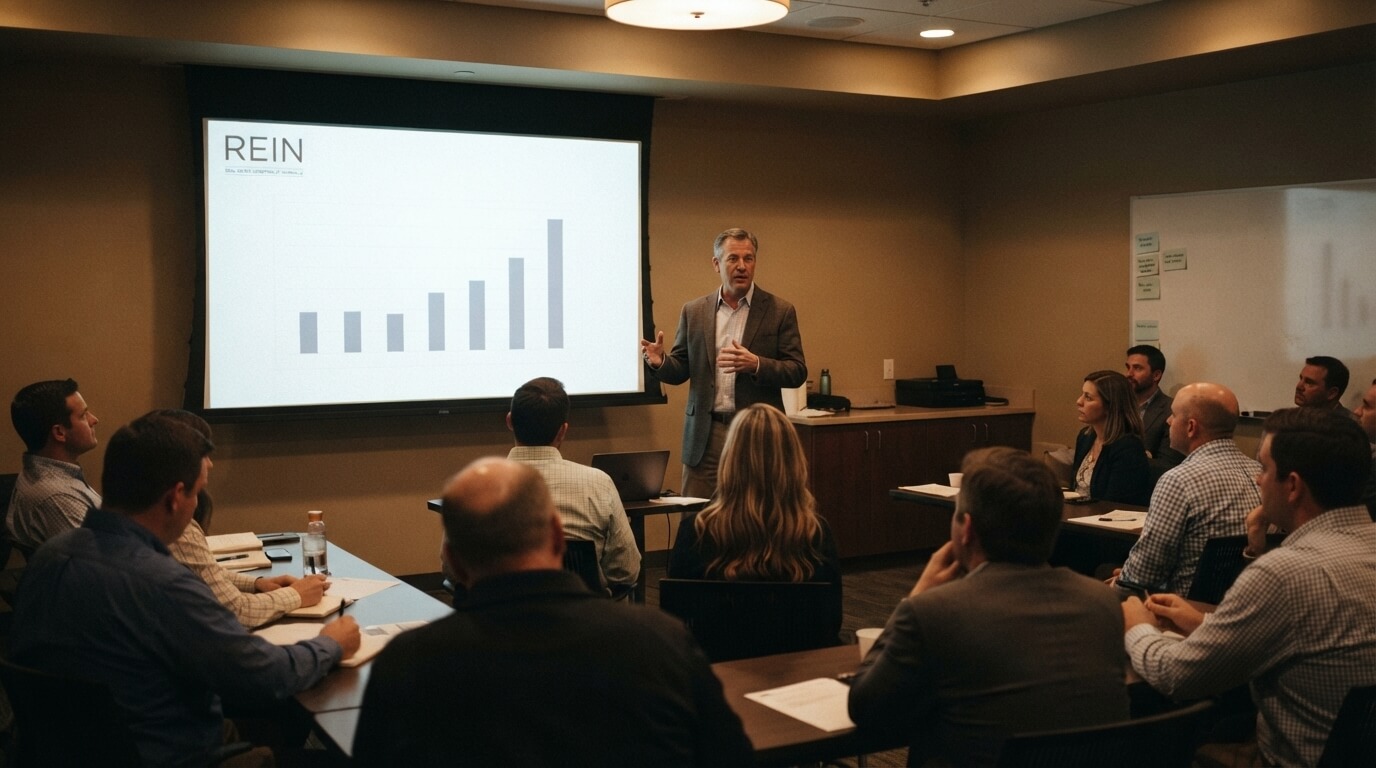


Not all real estate investing training is built the same way, and picking a program that matches your actual experience level matters more than picking the most popular one. A beginner sitting through an advanced tax strategy session will leave more confused than informed, and an experienced investor sitting through a fundamentals class will leave feeling like the evening was wasted. Knowing which track fits you before you commit an evening saves both frustration and time.

What Training Actually Covers
The Real Estate Investing Training inside REIN runs on current market conditions rather than an evergreen curriculum designed to be sold repeatedly. Sessions have covered creative financing and tax strategy alongside the fundamentals of wholesaling, buy-and-hold rental analysis, and how to flip houses for profit in specific Middle Tennessee submarkets. Speakers are practitioners, people who closed something in Davidson County recently and can walk through what the numbers actually looked like.
Beginner Track Versus Experienced Track
Beginner-focused training tends to concentrate on the concepts that come up in nearly every deal conversation, cash flow versus appreciation, the difference between a hard money loan and a conventional one, and what a realistic after-repair value looks like on a Nashville property rather than a national average. Experienced investors, having already internalised those fundamentals, tend to get more out of sessions on tax strategy, creative financing structures, and scaling a portfolio past the point where a spreadsheet alone can manage it.
Here is a simple way to think about which track fits where you are right now.
| What you're comparing | Beginner Track | Experienced Track |
|---|---|---|
| Focus | Fundamentals of financing and deal analysis | Tax strategy and creative structuring |
| Typical mistake avoided | Overpaying or underestimating repair costs | Missing a more efficient entity or financing structure |
| Pace | Slower, concept by concept | Faster, assumes fluency with basics |
| Best paired with | A mentor or an experienced member to ask questions | A specific portfolio problem you're trying to solve |
| Outcome | Confidence to make a first offer | A meaningfully better structure on the next deal |
Cost structures also differ between programs, and it is worth understanding before you commit. Some training is included with standard membership, while specialised sessions, particularly ones featuring an outside expert with a national reputation, may carry a separate fee. Neither approach is wrong, but knowing which applies to a specific session avoids the frustration of assuming something is free and being surprised at the door.
It also helps to think about training in terms of what mistake it is meant to prevent, rather than only what it teaches. A session on rehab budgeting exists because underestimating repair costs is the most common mistake beginners make. A session on entity structuring exists because experienced investors commonly discover, usually the hard way, that the wrong structure cost them more in taxes or liability exposure than a better one would have. Framing training around the mistake it prevents makes it easier to judge which sessions are actually relevant to you right now.
Why Local Training Beats a National Course
A workshop on creative financing sounds the same everywhere on paper, but how local lenders, title companies, and sellers actually respond to those structures only comes from instructors closing deals in this specific market. REIN guide for new investors covers why that local specificity matters more than beginners initially expect, and it is the main reason training built around one city consistently outperforms a generic recorded course sold nationally.

A common mistake, especially among ambitious beginners, is trying to attend every session available regardless of relevance, in the hope that more exposure automatically means faster progress. In practice, sitting through content well outside your current level tends to produce confusion rather than acceleration. It is generally more productive to master the fundamentals track fully before moving on, rather than sampling everything at once and retaining very little of any single session.
Training also tends to reveal gaps in your own plan that a solo study session never would. Hearing a specific question asked by another attendee, one you had not thought to ask yourself, is a common experience in a well-run session, and it is one of the clearest arguments for attending training in a room full of other investors rather than working entirely through recorded material alone.
How Training Connects to the Wider Network
Training sessions rarely stand alone. The relationships built while sitting through a session together tend to be as valuable as the material itself, since a room full of people working through the same numbers keeps talking about them well after the formal session ends. Members consistently point to those relationships as the source of financing introductions and deal referrals that never would have happened from a course taken alone at home.
Getting the Most Out of a Training Program
Bring a notebook rather than relying on memory. Training sessions move through specific numbers quickly, interest rates, typical repair costs, standard fee structures, and those figures are precisely what tends to be forgotten a week later if they are not written down somewhere you will actually look at again.
Come with a specific question about your own situation rather than a vague hope of learning something useful. Training moves quickly through real numbers, and attendees who leave with the most value are usually the ones who arrived already knowing what they wanted answered. Pair a session with our guide for beginners if you are still building the underlying vocabulary, since training assumes a baseline of familiarity that a completely new investor may not yet have.
It is also worth treating training as an ongoing habit rather than a single event. Concepts build on each other in a way that rewards consistent attendance over months, and the investors who improve fastest are usually the ones who keep showing up rather than attending a single session and calling it done. What to expect at a first meeting is a good primer if training will be your first exposure to REIN specifically.
FAQ
What is included in real estate investing training at REIN?
Sessions covering creative financing, tax strategy, wholesaling, buy-and-hold analysis, and flipping, taught by active local investors rather than a fixed national curriculum.
Is training different for beginners versus experienced investors?
Yes. Beginners tend to focus on foundational sessions around financing and deal analysis, while experienced investors gravitate toward tax strategy and creative structuring.
Do I need to attend every session to benefit?
No. Training is built so individual sessions stand on their own, though attending consistently over time compounds the value as concepts build on each other.
Is real estate investing training worth it if I already have a mentor?
Yes, since training exposes you to a wider range of perspectives and specific numbers than a single mentor's experience alone can provide.
How current is the training content?
Sessions are rebuilt around current market conditions rather than a fixed evergreen curriculum, so the content reflects what is actually happening in Middle Tennessee right now.
Ready to Start Real Estate Investing Training?
Find the track that fits your experience level and start learning locally.
Become a Member