

Plenty of good deals stall for one reason: one person has the money, another has the skills, and they never find each other. The right real estate investing partner can fill the gaps in your capital, experience or time. The wrong one can cost you far more than a missed deal. This guide shows you how to find a partner in Nashville and set up the relationship so it holds up.
It is general education, not legal or financial advice. Have an attorney review any partnership before you sign.
Know what you bring and what you need
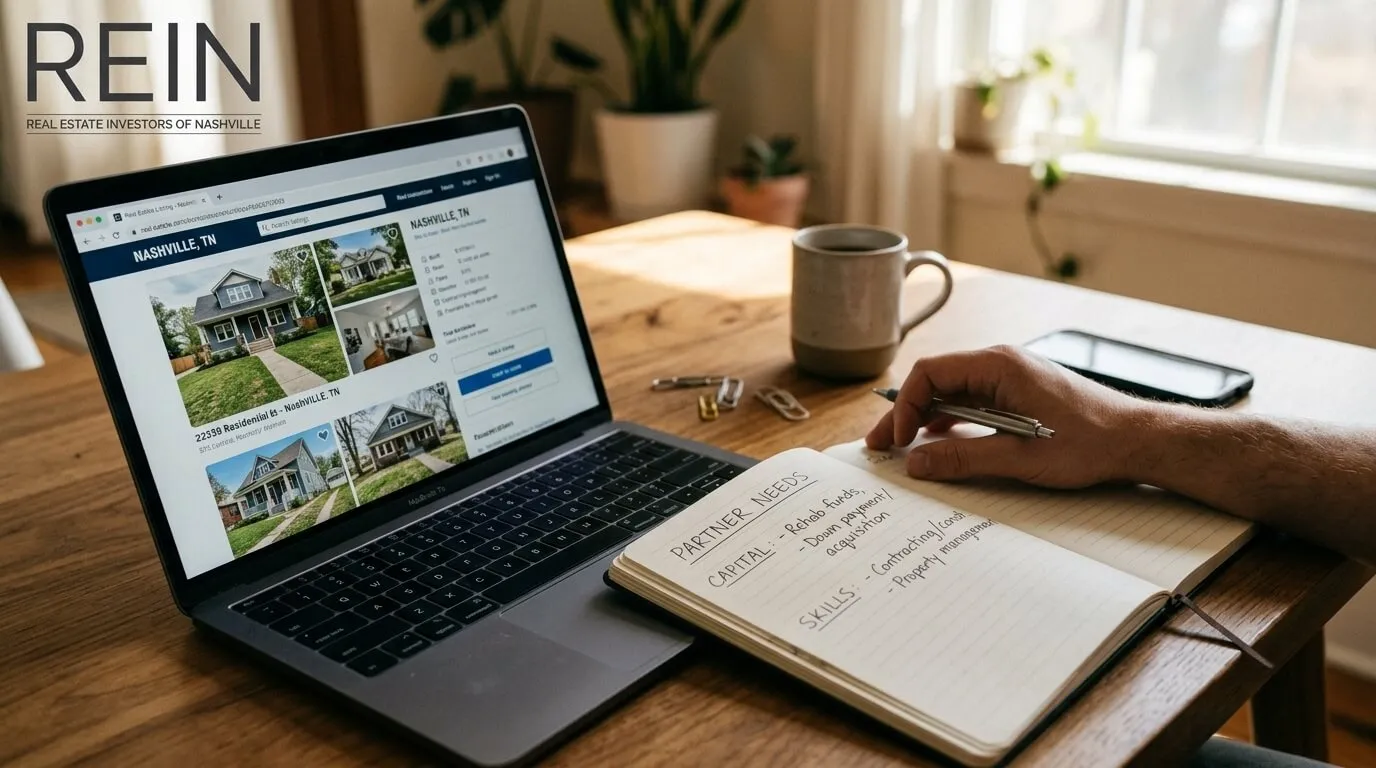
Start with an honest inventory. What can you contribute: cash, credit, deal finding, renovation know-how, project management or time? Then list what is missing. A partner should fill a real gap, not duplicate what you already have.
Be clear about your goals as well. Are you looking for a one-time project partner or a long-term relationship? Do you want an active role or a passive one? Mismatched expectations break more partnerships than bad luck does.
Where to find potential partners
The best partners usually come through relationships, not cold searches. Meet people at real estate networking events, ask for introductions from people you trust and spend time in a real estate investment community where members work together.
Look at those around you too. A contractor you respect, a lender who has seen many deals or a fellow member who asks smart questions may be the person you need. Notice how people behave over several meetings, not just in one conversation.
Common partnership structures
| Structure | How it works | Often suits | Consider |
|---|---|---|---|
| Capital and operator | One partner funds the deal, the other finds and manages it | A funder and a hands-on investor | Roles and returns must be clearly defined |
| Equal active partners | Both contribute work and money | Two investors with complementary skills | Decision-making can stall without clear rules |
| Single-project venture | A partnership for one specific deal | Testing a relationship | Needs a clear exit when the deal ends |
| Long-term partnership | Ongoing buying and holding together | Partners building a portfolio | Requires strong trust and agreements |
These are general descriptions, and the right setup depends on your situation. An attorney and a tax professional can explain the details for yours.

How to vet a potential partner
Do your homework before you talk numbers. Ask about their track record, what projects they have completed and what went wrong. Request references, and actually call them. Look up public records to confirm what you hear.
The Davidson County Property Assessor and the Register of Deeds show property ownership and recorded transactions, which helps you check claims about past deals.
Pay attention to character, too. Does the person communicate clearly, keep promises and handle disagreements calmly? Those traits matter more than a polished pitch.
Start small before you go big
The best test of a partnership is working together. Consider a small first project, or even a trial period with a defined scope, before you commit large sums. You will learn how the person handles stress, deadlines and money.
If things go well, you can expand. If not, you have limited the damage and kept the relationship workable.
Put everything in writing
A handshake is not enough. A written agreement should spell out who contributes what, how profits and losses are shared, who makes which decisions and what happens if someone wants out. It should also cover what happens if a project runs over budget or a partner cannot perform.
Work with a qualified real estate attorney to draft or review the agreement. The cost is small compared with the cost of a dispute. Clarity at the start protects the friendship as well as the money.
Agree on roles and communication
Decide who handles what. One partner might manage the renovation, another the financing and paperwork. Set expectations for how often you will update each other, how you will share financial information and how you will make big decisions.
Regular check-ins prevent small issues from becoming big ones. A short monthly review of numbers and progress goes a long way.
Match your risk tolerance and timeline
Partners often disagree about risk without realizing it. One may be comfortable with a long renovation and uncertain resale, while the other wants a quick, safe return. Talk through worst cases openly, including how much each of you could afford to lose.
Timelines matter just as much. Agree on how long you expect the project to take and what you will do if it runs late. Shared expectations on risk and time prevent many arguments later.
Keep finances clean and separate
Open a dedicated account for each project and keep clear records of every dollar in and out. Avoid mixing partnership money with personal funds. Transparent books build trust and make taxes, reporting and any eventual sale far simpler.
Plan the exit before you begin
Every partnership ends eventually. Agree upfront on how you will sell, buy each other out or handle a partner who wants to leave early. Also plan for the unexpected, such as illness or a change in circumstances.
It may feel awkward to discuss endings at the start, but it is far easier than negotiating in the middle of a conflict.
Warning signs to watch for
Be cautious if someone pressures you to move quickly, avoids written agreements or is vague about their experience. Other warning signs include refusing to share financial details, blaming others for every past failure and promising guaranteed returns.
If something feels off, slow down. Another good deal will come along, and it is much cheaper to walk away early.
Build your network first
The wider your network, the more choices you have and the better you can judge people. Our guide on how to build a real estate investors network in Nashville explains how to meet people and turn introductions into trust.
Over time, you may find that your best partners are people you already know well. Relationships built on repeated, honest interaction tend to last.
Frequently asked questions
How do I find a real estate investing partner?
Meet investors at local events, ask trusted contacts for introductions and spend time in an investing community where you can observe how people work. Relationships usually work better than cold searches.
What should a real estate partnership agreement include?
It should cover contributions, profit and loss sharing, roles, decision-making, reporting and exit terms. An attorney can tailor it to your situation.
Should I partner with a friend or family member?
It can work, but clear written terms matter even more because personal relationships are at stake. Treat it as a business arrangement.
How can I test a potential partner before committing?
Start with a small project or a limited scope, check references and review public records. Watch how they communicate, keep commitments and handle problems.
Find Your Real Estate Investing Partner at REIN
The right real estate investing partner is often someone you meet at the right event. Join Nashville’s real estate investors association, build trusted relationships and find people who share your goals.
Become a Member