

Wholesaling real estate gets talked about as if it were a shortcut. It isn't. It's a real business with real rules, and it pays only when you do the work: find the seller, negotiate the contract, find a buyer and close. If you're curious how a deal moves from first phone call to closing table in Nashville, this is the plain version.
We'll cover each step, where new wholesalers go wrong, and why local relationships matter more than any script.

What wholesaling actually is
A wholesaler negotiates a purchase agreement with a seller and, where the contract and applicable law permit, assigns their interest in that agreement to an end buyer for an assignment fee. The end buyer typically completes the purchase directly from the seller. The wholesaler's profit depends on the agreed fee and any costs involved.
That sounds simple, and the idea is. The hard part is doing it honestly and repeatedly, with sellers who trust you and buyers who actually close.
Step 1: Find a motivated seller
Everything starts with a seller who has a reason to sell and a property that needs work. Wholesalers find them through driving for dollars, direct mail, probate and tax lists, referrals and networking. Our guide to creative financing options also shows why some sellers are open to flexible terms instead of a straight cash price.
Talk to the seller like a person. Ask what's going on, what they hope to do next, and how soon they'd like to move. The answers tell you whether you can truly help.
Step 2: Run the numbers
Before you sign anything, work out what the property is worth after repairs, what it will cost to fix, and what an investor needs to earn on the deal. A rough formula many wholesalers use is the after-repair value, multiplied by a percentage investors want to pay, minus repairs, minus your fee.
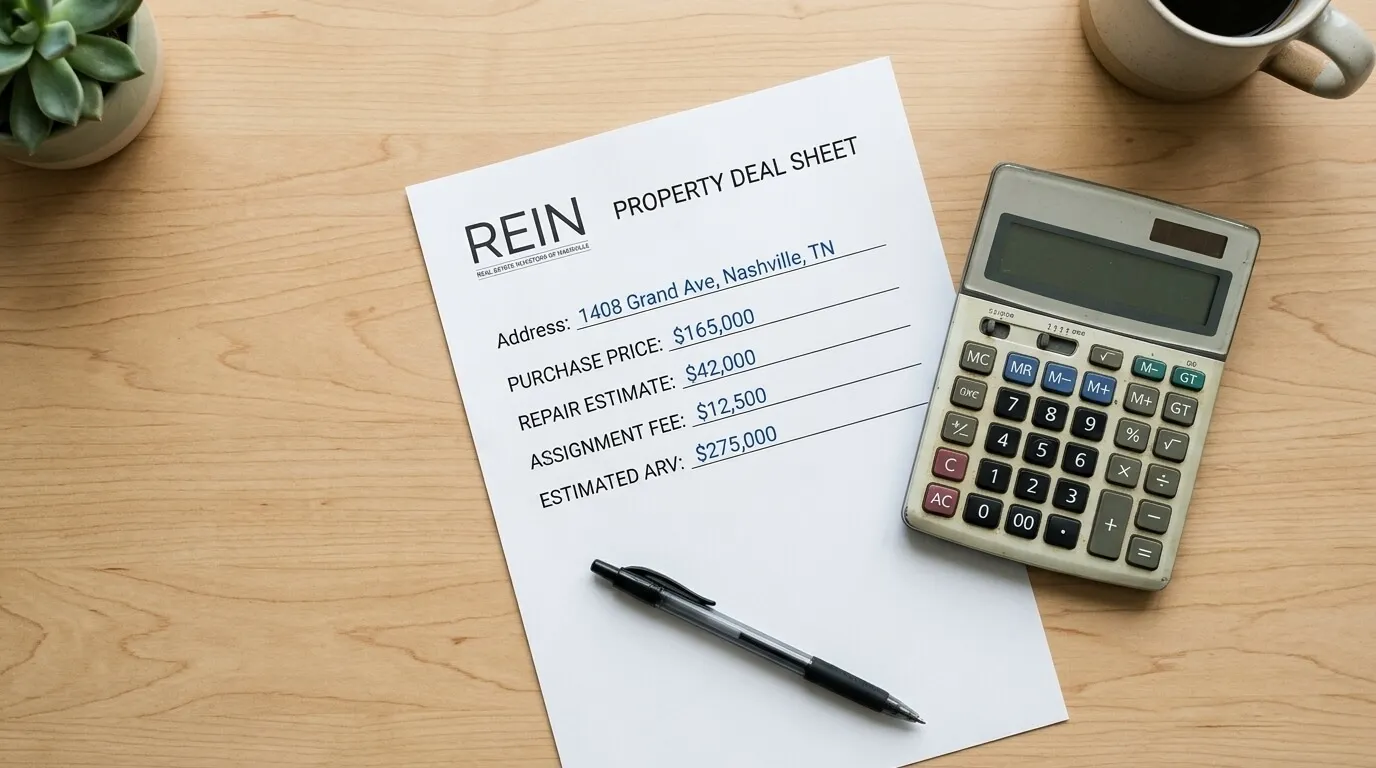
Percentages vary by market and buyer, so treat any rule of thumb as a starting point. Verify your comps and repair estimates with a contractor or an experienced investor, because a bad number hurts every party involved.
Step 3: Put it under contract
Once you and the seller agree, you sign a purchase agreement. If you intend to assign your contractual interest to another buyer, the agreement must permit the assignment. Tennessee law also imposes specific written disclosure requirements on real estate wholesaling, including disclosures to the seller and to a prospective assignee. These requirements can affect when and how you market and assign your interest, and the rules, including notice periods, have been the subject of recent legislation. Before signing or advertising a deal, have a Tennessee real estate attorney review your contract, your disclosure language and your process.
Step 4: Find your buyer
A contract with no buyer is a liability. Build your buyers list before you need it, and keep it honest. Cash buyers, flippers and landlords all want different things, so learn what each one is looking for.
Meeting investors face to face can be an effective way to build relationships and learn what local buyers are looking for. At REIN you can attend events, talk with active investors and learn what kinds of deals they want. See what happens at real estate networking events in Nashville for a preview, and check the REIN events calendar for upcoming meetings.
Step 5: Close the deal
Your buyer takes an assignment of your interest, where allowed, and typically completes the purchase from the seller. A title company or attorney handles the paperwork, and your fee is paid at closing. Stay in touch with everyone until the money moves, since deals can slip right up to the last minute.
What the numbers can look like
Say a house in need of work would sell for around $300,000 once repaired, and an investor wants to buy at a price that leaves room for repairs and profit. If repairs are estimated at $50,000 and the investor wants about 70 percent of the repaired value, the math works out to roughly $160,000. If you put the property under contract at $150,000, your fee could be near $10,000, before any costs.
These figures are only an illustration. Real deals depend on the neighborhood, the condition, the buyer and the timeline. The point is to see how much each assumption moves the result, because a small error in repairs or value can erase your fee. The 70% figure is only an illustrative rule of thumb, not a universal buying formula. Investors should also account for financing, holding and transaction costs, resale expenses, contingencies and their required profit before deciding what they can pay.
Building a reputation that brings repeat deals
Wholesaling is a reputation business. Buyers return to people who describe properties accurately, price them fairly and close on time. Sellers refer friends to people who treated them with respect. Both groups talk, and in a city like Nashville they often know each other.
How wholesaling compares with other strategies
| Strategy | Capital needed | Typical timeline | Main risk | Skills that matter |
|---|---|---|---|---|
| Wholesaling | Low | Weeks | Contract falls through | Negotiation, marketing |
| Fix and flip | High | Months | Repair and resale costs | Project management |
| Buy and hold | Moderate to high | Years | Vacancy, repairs | Tenant and property care |
Wholesaling lowers the cash you need, but it asks more of your time and your reputation. In a relationship-driven business, a poor experience can damage your reputation quickly.
Where new wholesalers get stuck
Most beginners stall at one of two points. Some can find sellers but can't find buyers, so contracts expire. Others build a long buyers list but never get a seller on the phone. Notice which side is weaker and spend your week there.
Mistakes to avoid
- Overpromising to a seller, then failing to close.
- Marketing a deal before checking what your contract and Tennessee law allow.
- Skipping legal review. Rules around disclosure and licensing are changing, so get current advice from an attorney.
- Ignoring buyers. Your list matters as much as your leads.
A local investing community in Nashville can help you learn from other investors' experiences and recognize common mistakes before they become costly.
Frequently asked questions
Is wholesaling real estate legal in Tennessee?
Wholesaling is practiced in Tennessee, but a 2025 state law requires written disclosures to the seller and to a prospective assignee when you wholesale. Requirements, including notice timing, can change, so have a Tennessee real estate attorney review your contract and process before you market any deal.
How much can you make wholesaling real estate?
Fees vary widely by deal, price range and market. Some deals pay a few thousand dollars and others pay more, but income is uneven, especially at the start. Plan for slow months.
Do I need a real estate license to wholesale?
It depends on the activities and transaction structure involved. Selling an interest you hold is different from marketing property you don't control, and some activities can require a license. Ask a Tennessee attorney about your specific approach before you begin.
Learn Wholesaling Real Estate the Right Way With REIN
Wholesaling real estate works best when you have buyers, mentors and honest feedback. At REIN you can meet active investors, ask about the rules and find buyers for your deals. Join us at the next meeting.
Join REIN