
Every conversation about real estate investing for beginners eventually lands on the same worry: “Have I missed the boat?” With Nashville prices where they are, plenty of new investors feel that way. You haven’t. You just need a plan that fits your money, your time and your tolerance for risk, and a first year that’s built around learning before buying.
Here’s a realistic 12-month roadmap based on what we see from members who go on to close their first deal.

Months 1 to 3: Learn before you spend
Start with vocabulary and math. Learn the basics of cash flow, cap rate, cash on cash return, ARV and holding costs. Read a couple of books, listen to a few podcasts, and then go and sit in a room with people who do this for a living.
The books teach you terms. The room teaches you what actually goes wrong. At REIN meetings, experienced investors talk openly about deals that fell apart, contractors who disappeared and numbers that looked great until the inspection. That kind of honesty is hard to find online.
Use this stretch to look at your own finances too. Pull your credit report, check your savings, and work out how much you could comfortably lose on a first deal. That number sets your ceiling.
Months 3 to 5: Choose one strategy
Beginners often try to learn everything at once, which is how they end up doing nothing. Pick one strategy and go deep.
- Buy and hold rentals build steady income and long-term equity.
- Fix and flip projects can pay faster but carry more risk and require reliable contractors.
- Wholesaling needs less capital but more hustle and careful attention to the rules.
- House hacking lets you live in one unit and rent the others, which is a gentle way in.
| Strategy | Cash needed | Risk level | Time to first payoff | Good fit if you |
|---|---|---|---|---|
| House hacking | Low to moderate | Low | Ongoing | Want to live in your first deal |
| Buy and hold | Moderate to high | Moderate | Slow and steady | Prefer long-term income |
| Fix and flip | High | High | Months | Have contractor skills or contacts |
| Wholesaling | Low | Moderate | Weeks to months | Have more time than cash |
There’s no single best option. The right pick is the one you’ll actually stick with when it gets hard.
Months 5 to 8: Build your team
Real estate is a team sport. Before you make an offer, you want a few names in your phone: a lender who understands investor loans, an agent who works with investors, a real estate attorney, a contractor and a property manager if you’re planning a rental.
Our creative financing guide for Nashville beginners explains how some investors buy with seller financing, subject-to deals and partners when traditional loans don’t fit. It’s worth reading before you decide you can’t afford to start.
Ask your future team questions now, while nothing is at stake. How fast do they respond? What do they charge? Which deals do they like? The answers will save you from scrambling later.
Months 8 to 10: Analyze at least 50 deals
This step feels tedious, and it’s the most valuable thing you’ll do. Run the numbers on fifty properties, even if you never make an offer. You’ll learn what a good deal looks like in your price range, and you’ll spot a bad one in minutes.
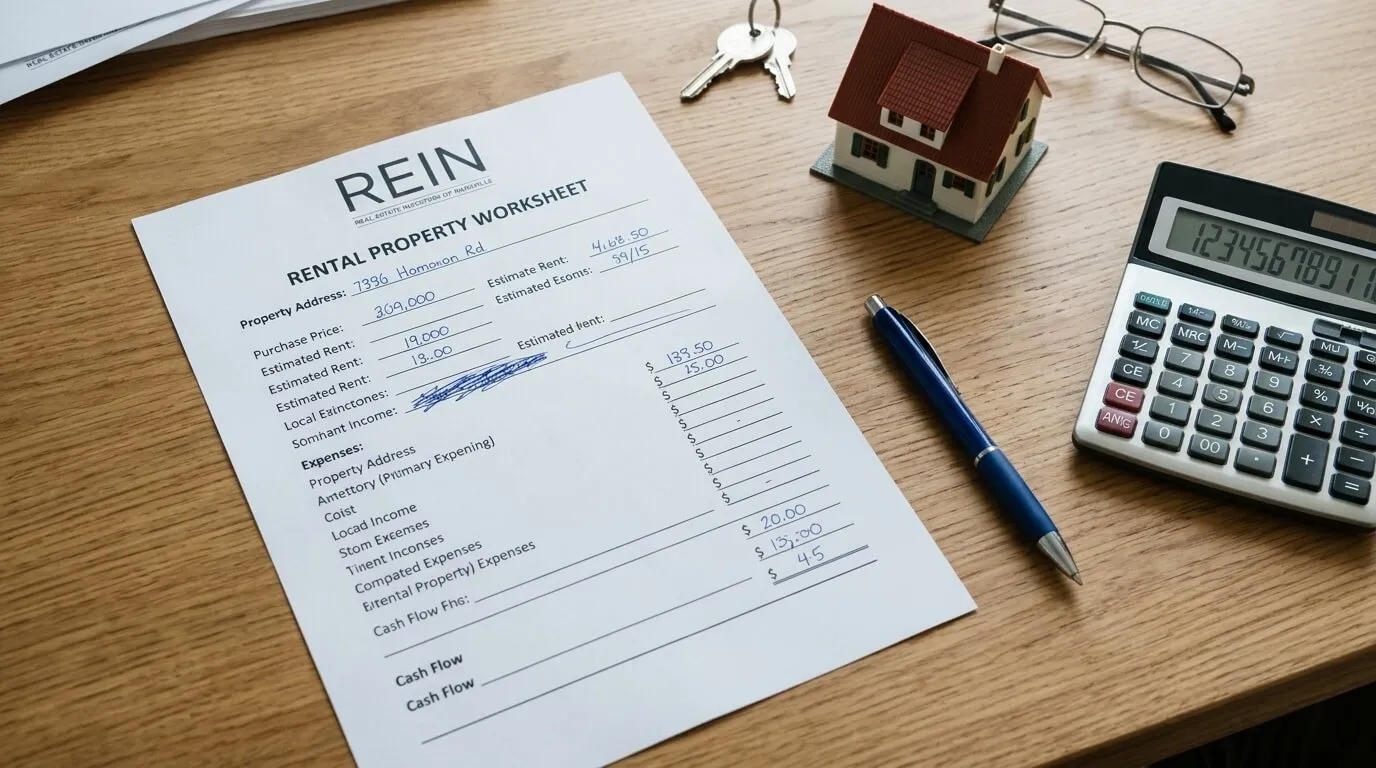
Keep a simple spreadsheet. Record the address, asking price, estimated repairs, expected rent or resale value, and your verdict. By the end, you’ll know your market better than most people who’ve been casually watching it for years.
Months 10 to 12: Make offers and learn from them
Make offers on properties that meet your numbers. Most will be rejected. That’s normal, and every rejection teaches you something about price, timing or the seller’s motivation.
When one is accepted, lean on your team and your network. Bring the deal to a REIN meeting and ask for feedback. Check the REIN events calendar for the next gathering, and see what REIN membership includes if you want ongoing access to education and peer support.
How to think about funding your first deal
Money worries stop more beginners than anything else, so it’s worth spending a little time here. Cash isn’t the only way in. Conventional loans, house hacking with a lower down payment, private money from people you know, seller financing and partnerships all show up in Nashville deals.
Each one has trade-offs. Partnerships split the profit, private money costs interest, and seller financing depends on a willing seller. None of them is magic. What they have in common is that you’ll find the best options by talking to people who’ve used them. Ask members how they structured their first purchase and what they’d do differently.
Whatever route you choose, line up financing before you fall in love with a property. Sellers take you more seriously when you can show a pre-approval or proof of funds, and you won’t waste a good deal while you scramble for money.
Mindset matters more than you’d expect
Your first deal will almost certainly be messier than the examples you’ve read about. A repair will cost more, a closing date will slip, and a tenant will call at an awkward hour. Experienced investors aren’t people who avoid problems. They’re people who’ve solved enough of them to stay calm.
Treat the first year as paid education. If you finish with a clear strategy, a trusted team, a pile of analyzed deals and one or two offers, you’re far ahead of where you started.
Common first-year mistakes
- Waiting for the perfect market. There isn’t one, only deals that work at today’s prices.
- Buying a property because it feels exciting instead of because the numbers work.
- Underestimating repairs and vacancy. Add a cushion to both.
- Going it alone. The investing community in Nashville exists so you don’t have to.
Frequently asked questions
How much money do I need to start real estate investing as a beginner?
It depends on the strategy. House hacking can start with a low down payment, while flipping needs more cash. Wholesaling and partnerships can lower the amount you put in, but each has its own risks and rules.
Should I buy my first investment property in Nashville?
It depends on your budget and goals. Some investors buy locally because they can see the property and know the market. Others buy in nearby, more affordable areas. Start by learning the numbers in the market you can visit easily.
Do I need real estate training courses to begin?
Not necessarily. Many beginners learn from books, workshops, mentors and local investor meetings. Be careful with expensive programs that promise quick results, and ask experienced investors for their honest opinion first.
Start Real Estate Investing for Beginners With REIN
You don’t have to learn real estate investing for beginners alone. Come to a REIN meeting as a guest, ask the experienced investors your questions, and find out which strategy fits your goals and your budget.